


A/V Advertisements for Cat’s Cradle Animal Rescue
Programs used: iMovie, CapCut
— YouTube Short —
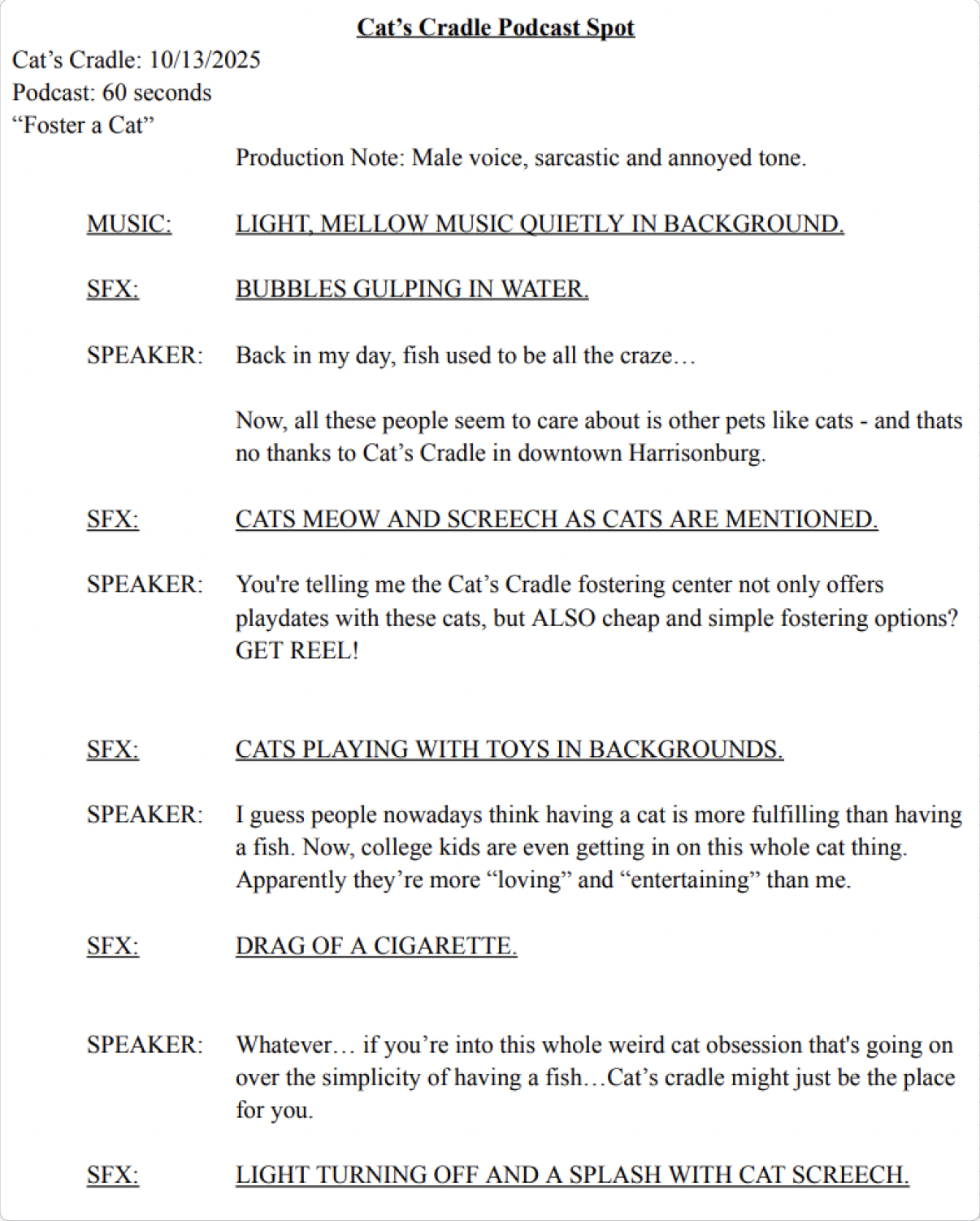
— Podcast Spot —
Big Idea
Fostering makes a house a home
My team’s creative approach was built around a simple insight from our research: many JMU students who live off campus think of Cat’s Cradle as a place to volunteer, not as a place to foster, and worries about cost and long-term commitment keep them from trying. We reframed fostering as something that makes a rented apartment feel more like home, while helping a cat find theirs.
The fish character concept plays on the classic cats vs. fish dynamic. We wanted to take a more unique approach to promoting fostering instead of only focusing on how cute the cats are. The comedic fish persona creates a memorable story that quickly grabs attention and piques interest.
Encourage JMU students who live off campus to foster cats from Cat’s Cradle
Show that fostering is simple, affordable, and doesn’t require a long-term commitment
Concept and create two ad spots (one video, one audio) that carry one idea across different channels:
Video ad: a 60 second video for a social media channel of choice
Podcast spot: a 60 second podcast audio ad thats cohesive with the video concept
This group project was completed for an Elements of Creative Advertising course (SMAD 342) at James Madison University and is not affiliated with Cat’s Cradle of the Shenandoah Valley
Team members: Sean Myers and Elizabeth Miller
The Design Brief
Cat’s Cradle of the Shenandoah Valley is an animal rescue nonprofit founded in 1998, and is located in downtown Harrisonburg, Virginia. Its mission is to ensure and maintain a safe, compassionate community for cats in the Shenandoah Valley. It serves Augusta, Page, and Rockingham Counties.
Its work centers on spay/neuter assistance, trap-neuter-return for community cats, and adoption, along with pet retention programs that help keep cats with their families. The organization is foster-based, working with local shelters, and rescues about 700 cats each year from at-risk shelters as space in foster homes permits.